Choral Cthonics brings together a range of artists to explore the voice as instrument, threshold and collective force. Metro Arts CEO, Kieran Swann curated the exhibition and provides deeper understanding of the works in this essay.
News · 27 August 2026
Choral Cthonics: Curator’s essay
A hum in the dark. A breath held until it becomes rhythm. A voice repeated until language dissolves and meaning gives way to vibration.
Choral Cthonics is a group exhibition that explores breath and the voice as technologies of relation – intimacy, synchronicity and shared agency. Across sound, video, performance and text, artists operate from an array of cultural understandings of self, collectivity and Country, proposing and exploring disparate and overlapping notions of kinship, exchange, responsibility, mutuality, dissolution and disintegration. Here, the voice is fundamentally relational, synchronising bodies, rhythms and ecosystem, and the somatic experience of the self is unstable, porous or temporarily erased.
The exhibition unfolds through four ideas that arrange and rearrange:
Rather than a linear sequence, these four ideas continually produce and transform one another. Beginning with our most intimate rhythms, Breath becomes Voice: intonation, resonance, effect and affect. Voice describes Language, shared symbols that carry implications of linearity, time, distance and connection. Language orders and articulates Worlds: complex ecologies of human and more-than-human connection. But these relationships also run in reverse, or across one another. Worlds shape Language; Language conditions Voice; Voice alters Breath; Breath complicates the separation between self and World. 
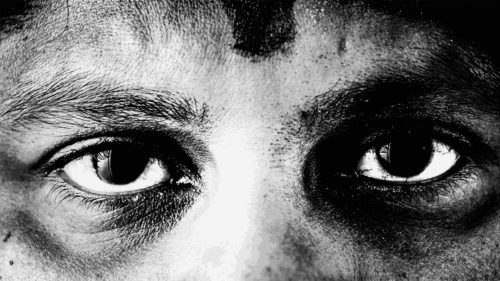
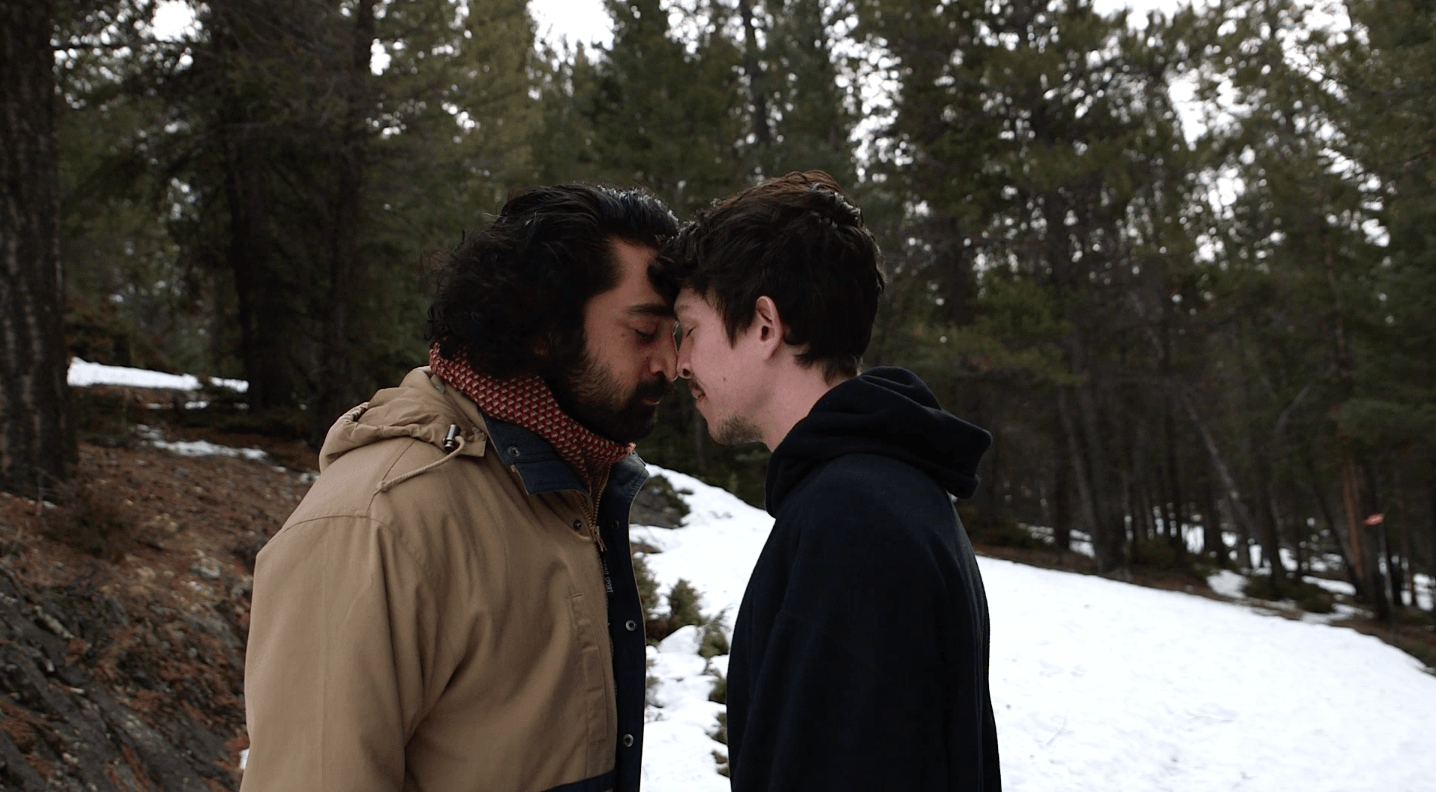
Léuli Eshrāghi‘s Sogi Mai (pictured) offers the first of these encounters. The work functions as a welcome to visitors entering the exhibition, and thematically, by beginning with the most intimate and elemental condition – locating intimacy and the quiet recognition of another body through shared respiration. Drawing on a re-emerging Samoan practice with a cross-cultural community of the artist’s peers, respectfully filmed on Blackfoot, Stoney Nakota and Tsuu T’ina territories, which are subject to the complex histories of Treaty 7, Sogi Mai proposes reciprocal care as an alternative to colonial and contested systems of ownership.
The work emerges from cultural understandings in which kinship, Country and collective responsibility are already deeply entangled. Breath is a way of acknowledging that existing relationship – a gesture of welcome, reciprocity and recognition.
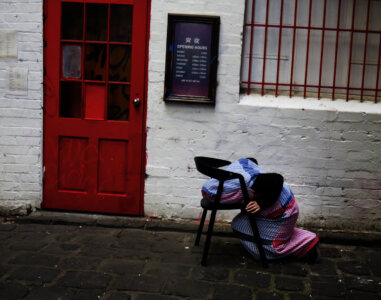
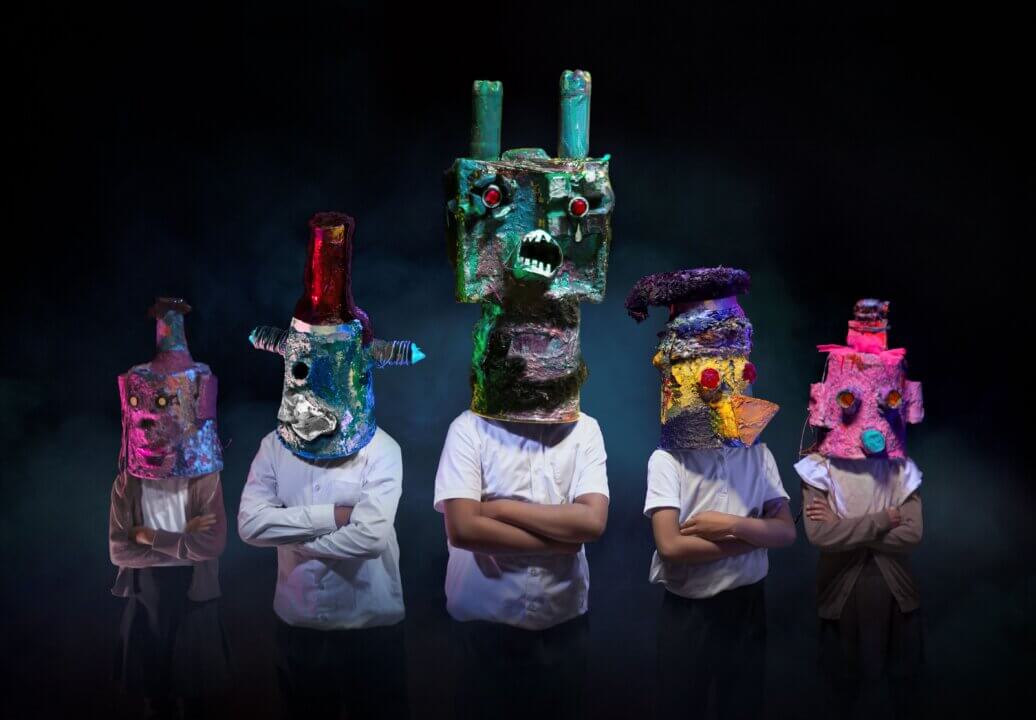
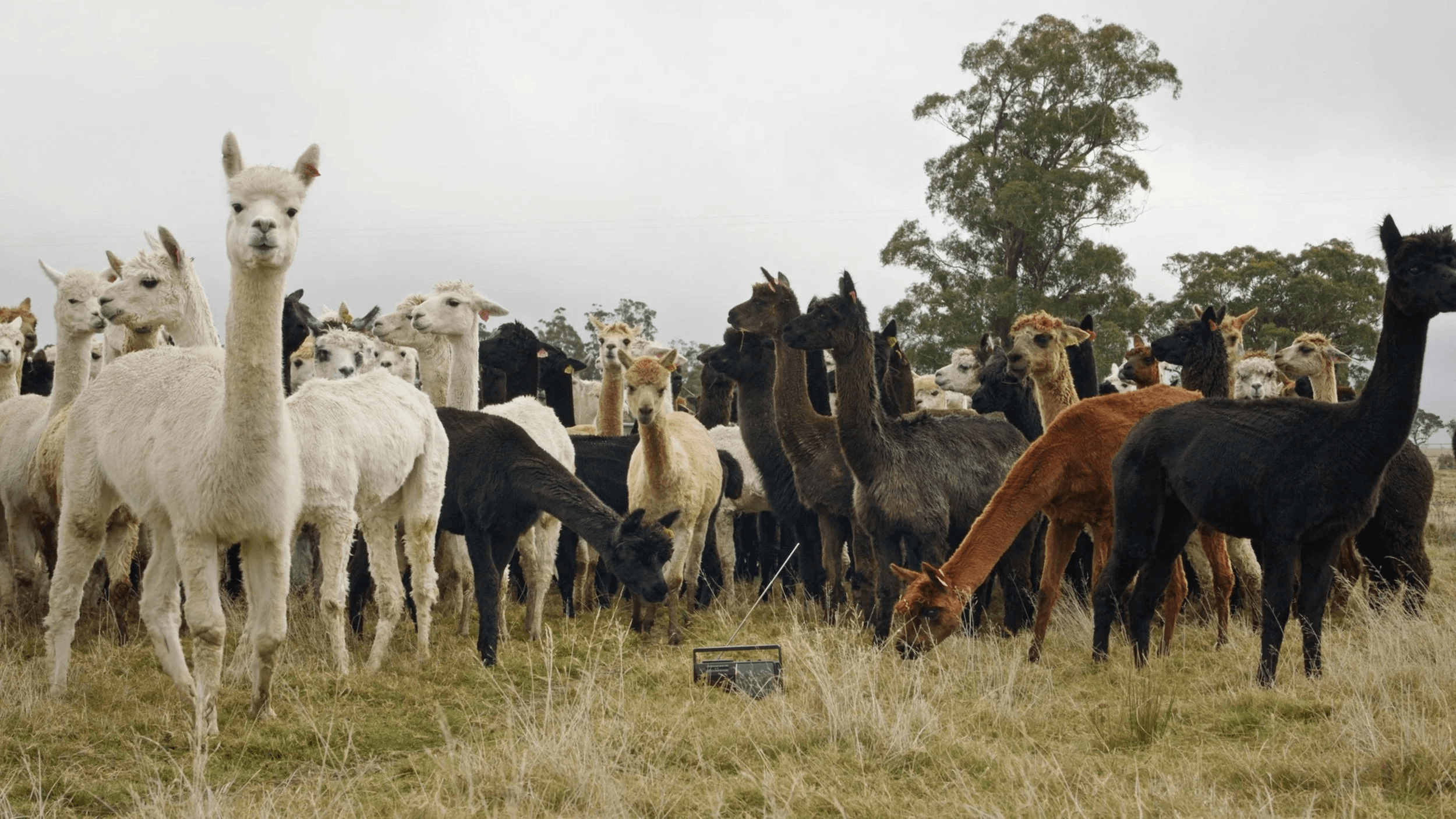
From this intimate exchange, breath becomes voice. Across the gallery, Tina Stefanou’s The Longest Hum (pictured, still) and Mikhail Karikis’ No Ordinary Protest (still pictured in header) face one another, their voices entering into the same shifting acoustic field. Both position collective vocalisation as a technology for agency.
The Longest Hum extends breath into sustained, collective vocalisation and shared resonance. Filmed following engagement with communities leading to the day of the 2022 federal election, the work places non-verbal collective attunement in parallel to structures of representative democracy. Synchronised vibration between the participants plays out in stark contrast to combative structures of party politics. The artist describes the work as seeking “collective planetary vibration”; shared fields of vibration between singer, listener and environment to effect change not through oppositional structures but through something more cosmic.
As with Stefanou’s Hum, Karikis positions collective vocalisation as a technology for agency with No Ordinary Protest. Karikis loosely adapts Ted Hughes’ ecofeminist parable The Iron Woman, in which a group of London children are ‘gifted’ a collective sound that synchronises intent, courage and action. The resulting work, developed through an experimental and improvisatory pedagogy, posits sound as a tool to agitate, collectivise and astound. The two works turn towards one another across the gallery; humming and collective sound become ways of organising bodies without relying upon the structures of formal speech. The voice gathers before it explains; synchronisation precedes agreement.
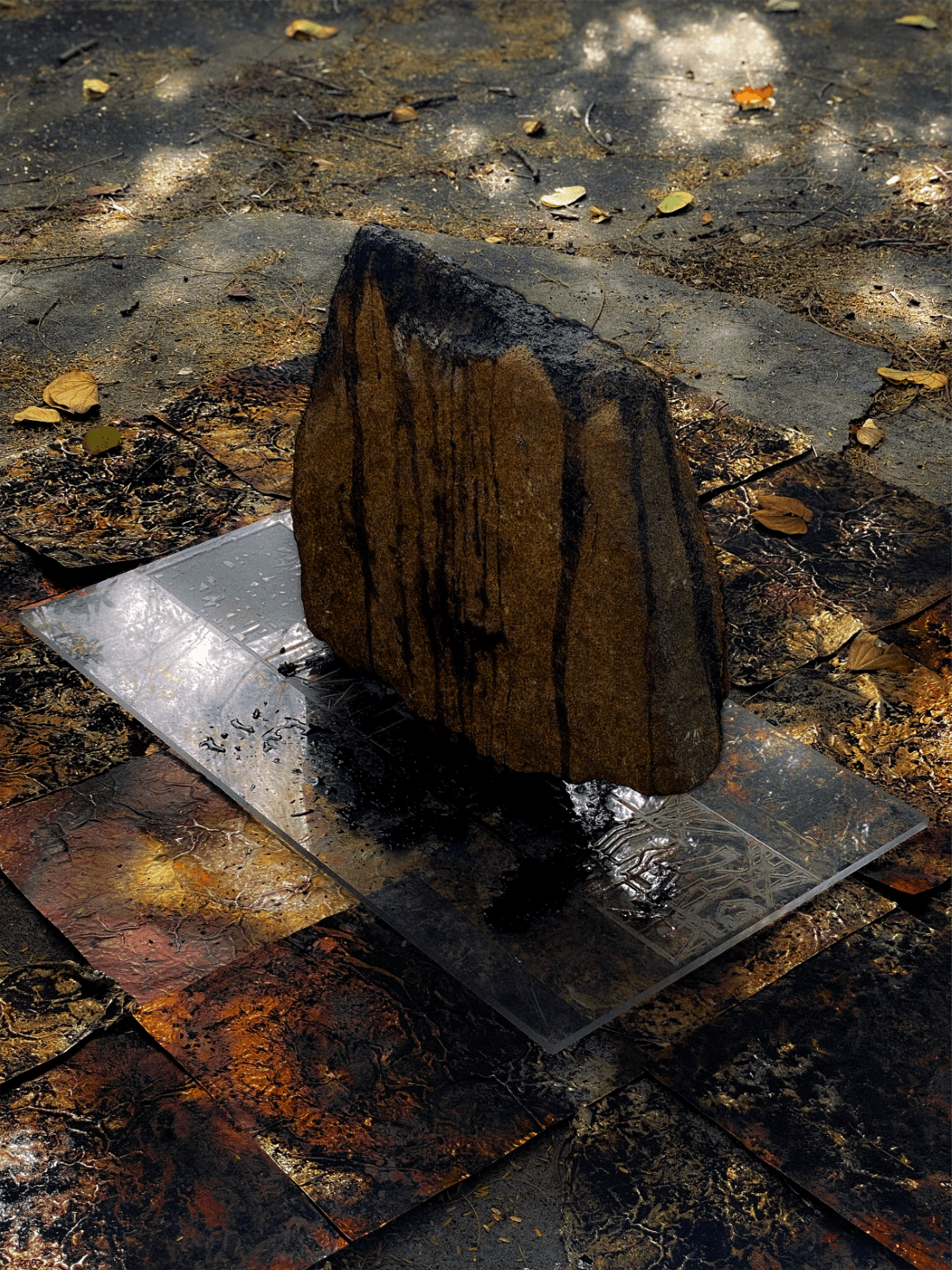
Between, Dean Ansell’s What seeps from the symbol (pictured) offers a proposition of language and time. Ancestral knowledge, relationships and voices have been coded into sigils and symbols – traces of language initiated by Ansell’s ancestors and carried across generations. Here laser-engraved on to acrylic, symbols are combined and stacked into a composition that collapses linear ordering. This treatment of time extends to its broader materiality. Sheets of copper are pressed into cracks in boulders, recording traces of slow tectonic shifts in earth. The symbols and the copper operate as parallel forms of inscription, carrying the residue of language across generations, and recording the deep movements of geological time.
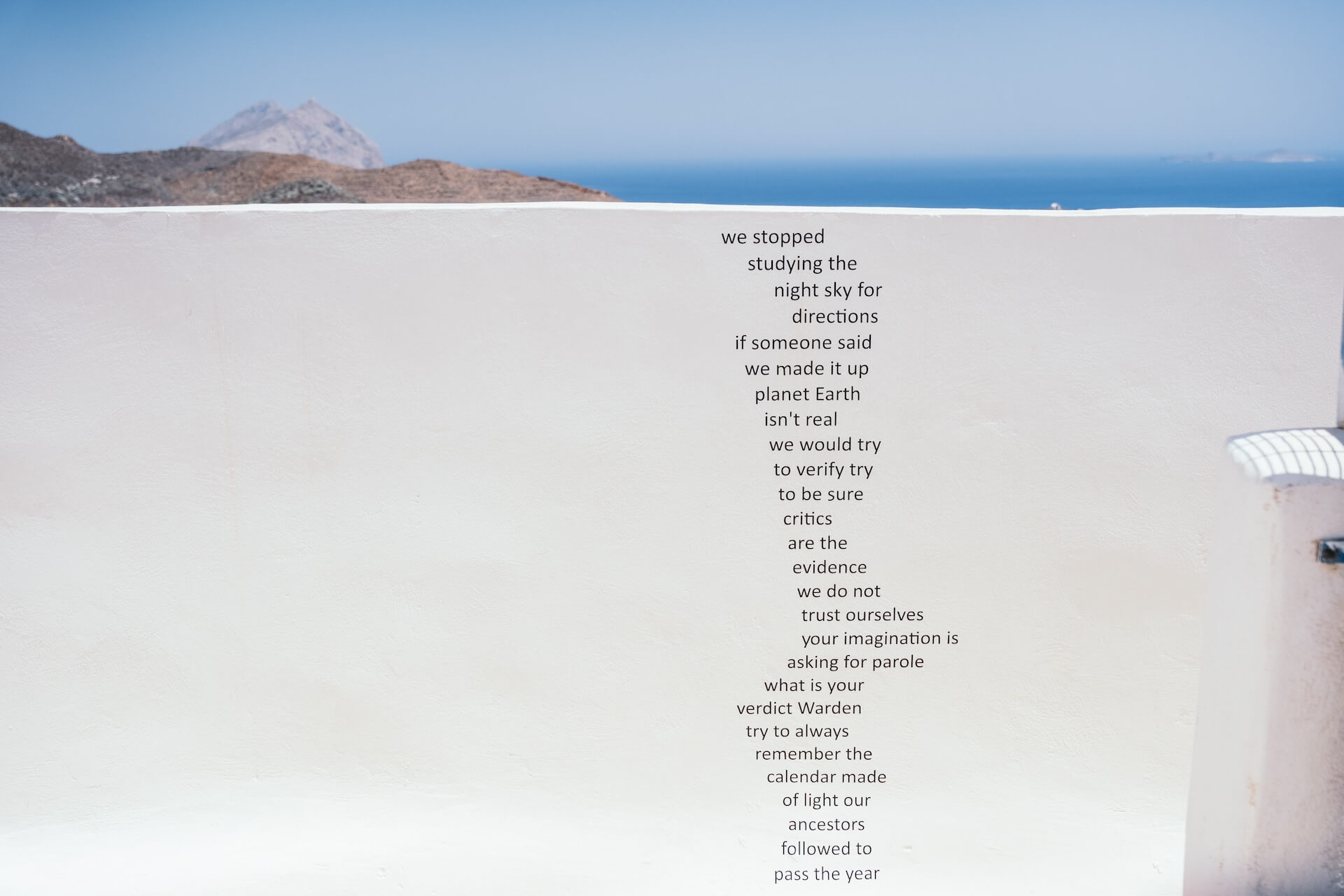
CAConrad’s poem-sculptures, From First Light, materialise the abstraction and ephemerality of language. Printed on textile, the works section the gallery, enacting how the Western written word structures, orders and linearises, while their fractured and staggered typography queries these conventions. Each of the two works uses language as technology to return us to the body and the world. The effort of returning extracted stone to its source meditates on slow healing in the natural world while the second work turns towards the violence and tenderness of knowing and being known – the pain of our shadows overlapping, even as we find comfort in the vulnerability of being recognised and understood. “A poet’s main occult tool is the body”; words may be the medium, but the body is the poet’s primary instrument – the site through which the world is felt, registered and known.
Jazz Money’s infinite iterative piece destabilises language itself. The work expands the individual idea of lyric authorship – normally figured as separately from Country – through a continuously shifting assemblage of words and landscape that revolve through an ephemeral, infinite archive. It deploys contingency at the level of programming to establish unexpected possibilities via new combinations. The archive is generative, unfolding into a constant and receding horizon.
In this sense, infinite iterative piece returns breath, voice, language and world to constant circulation. The individual voice is part of something that exceeds any single author, utterance or moment.
Returning through the gallery, Cicadas’ Voices Through A Changing World operates as a reflective postscript – part research project, part archive, part artwork. Situated in its own listening nook, the work considers multiple propositions for what constitutes a chorus, with a sonic archive of human and more-than-human voices. Exploring voice across species and culture, their fascination with vocal assemblage eschews taxonomy, museology and ethnography to instead privilege somatic, relational framings for sonic ecologies.
The introduction of the archive expands the exhibition, opening onto a chorus that is species-wide, culturally interwoven and continually changing. It is an invitation to continue listening. What becomes audible when we stop treating the human voice as the centre of the field?
To be part of a chorus is to listen as much as vocalise, to recognise that our individual voice is never entirely our own. Breath moves between bodies, voices overlap, and the boundary between one voice and another becomes difficult to locate.
Acknowledgements
Choral Cthonics artists: Dean Ansell, Cicadas (Celeste Ricci & Maria Molina), CAConrad, Léuli Eshrāghi , Mikhail Karikis, Jazz Money, Tina Stefanou
Curator: Kieran Swann
Curatorial advisor: Rachel O’Reilly
Metro Arts’ 2026 program is supported by the Australian Government through Creative Australia, its funding and advisory body. Metro Arts is supported by the Queensland Government through Arts Queensland and the Visual Art, Craft and Design Framework, an initiative of the Australian, state and territory governments.